Origin & Tesla Heritage
On October 15, 1911, multiple newspapers — including The New York Herald and The Washington Post — reported Tesla's announcement of a new engine he called "The Monarch of Machines." Tesla described extraordinary power density claims and a propulsion concept rooted in electromagnetic principles and boundary layer effects.
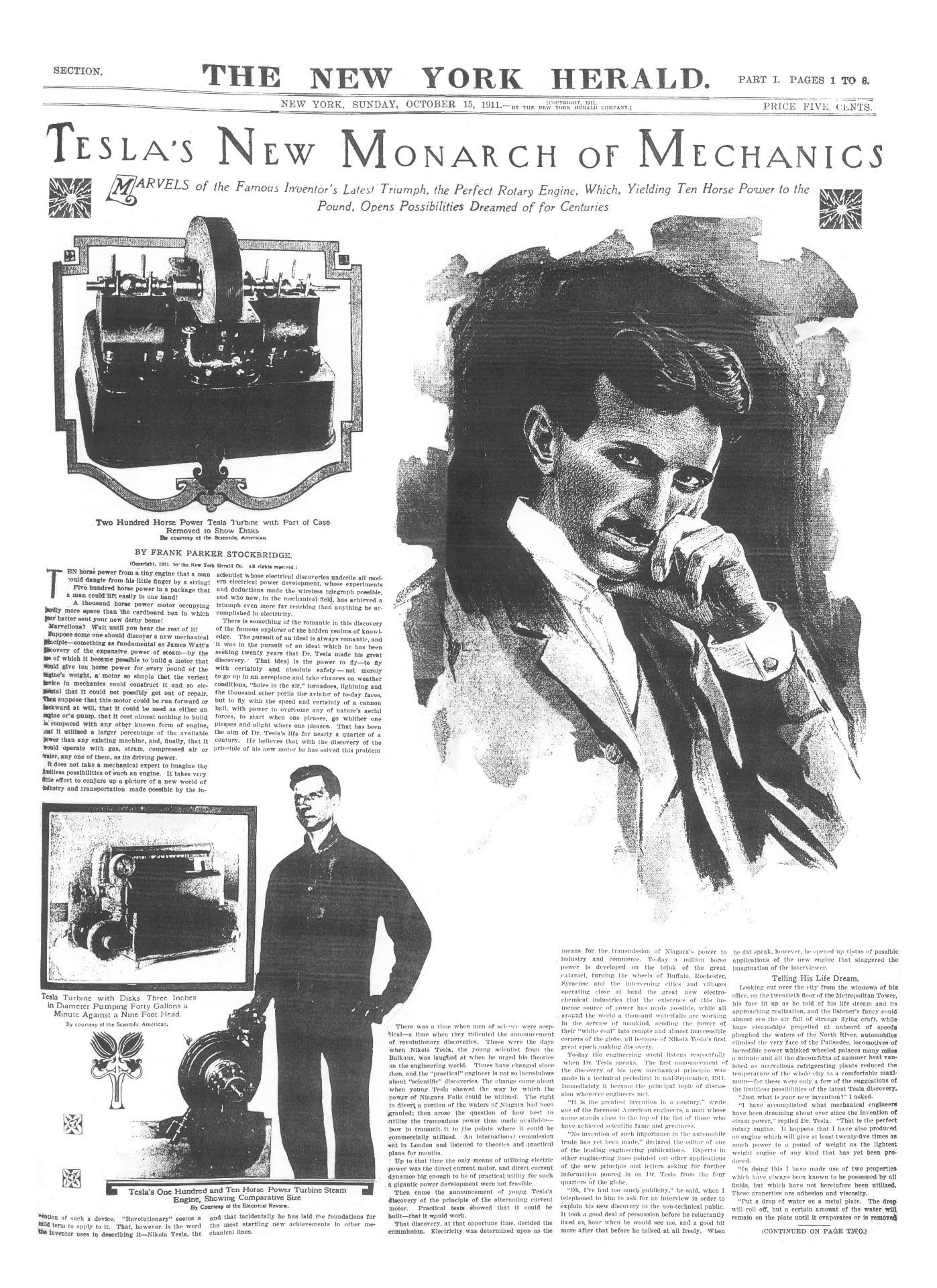
The New York Herald, October 15, 1911
Why This Matters to Engineers
Tesla's framing — regardless of whether his specific claims were ultimately realized — raised enduring questions about power density, energy conversion efficiency, resonance phenomena, and the boundaries of electromagnetic systems. For electrical engineers and physicists, these remain active domains of inquiry.
The value for a modern aerospace institution is not in claiming Tesla's device, but in recognizing the discipline behind his question: What are the actual physical limits of propulsion, and how do we approach them responsibly?
Key Technical Themes from 1911
- Power density and weight-to-thrust ratios
- Boundary layer and fluid dynamics phenomena
- Electromagnetic resonance and energy coupling
- Multi-fuel and multi-medium operational concepts
What We Take Seriously
Historical ambition separated from implementable constraints is speculation. What makes Tesla's legacy valuable to a modern engineering organization is the discipline we apply to it:
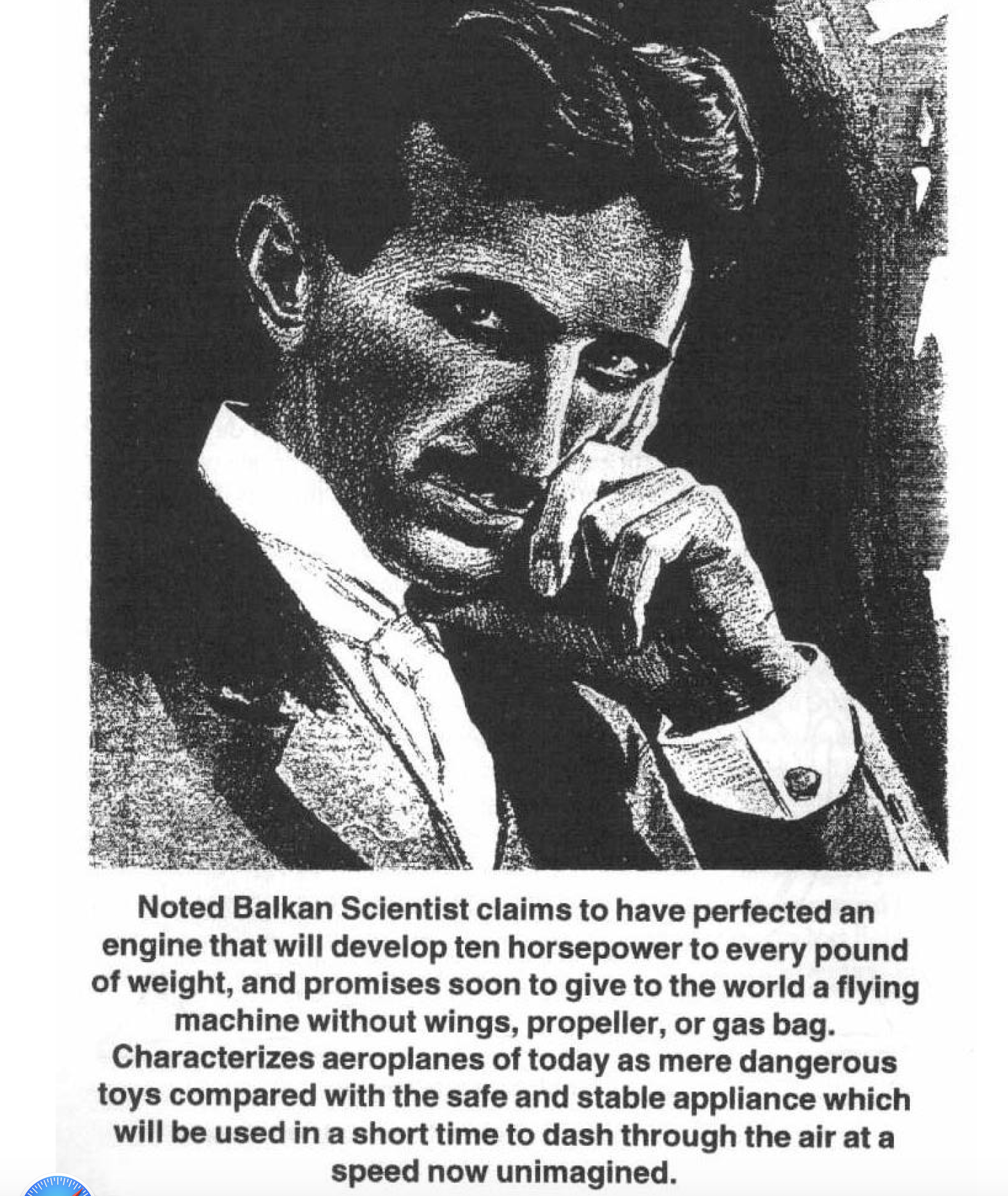
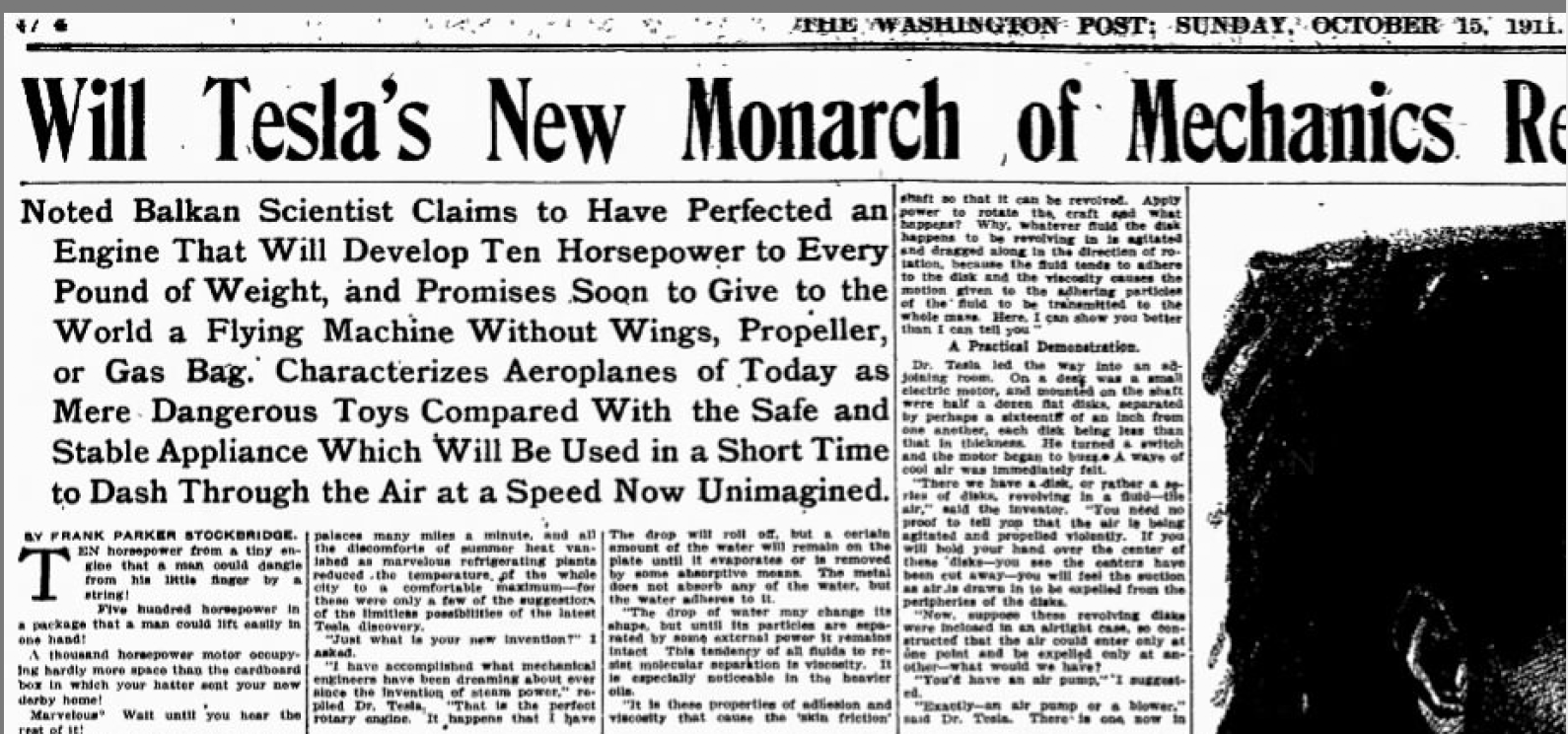
The Washington Post, Sunday, October 15, 1911
Learning from the Past
Monarch Space Systems uses historical records as a research lens — not as a blueprint for replication. Our approach is grounded in:
Archival review and contextual analysis
Conceptual replication mindset (not literal device claims)
Disciplined hypothesis formulation and testing
Modern computational tools: AI, HPC, and emerging quantum computing
"If you want to find the secrets of the universe, think in terms of energy, frequency and vibration."
This principle informs our approach to propulsion research
Historical Inspiration: References to Nikola Tesla and historical publications are presented as philosophical inspiration and do not imply ownership of, or exclusive continuation of, specific historical designs.